 Paul Brazil

The Best Flu Vaccine for Seniors
 Paul Brazil : Mar 18, 2025, 10:32:12 AM
Vaccines have a powerful role in protecting against dangerous diseases, especially for older adults and individuals at high risk.
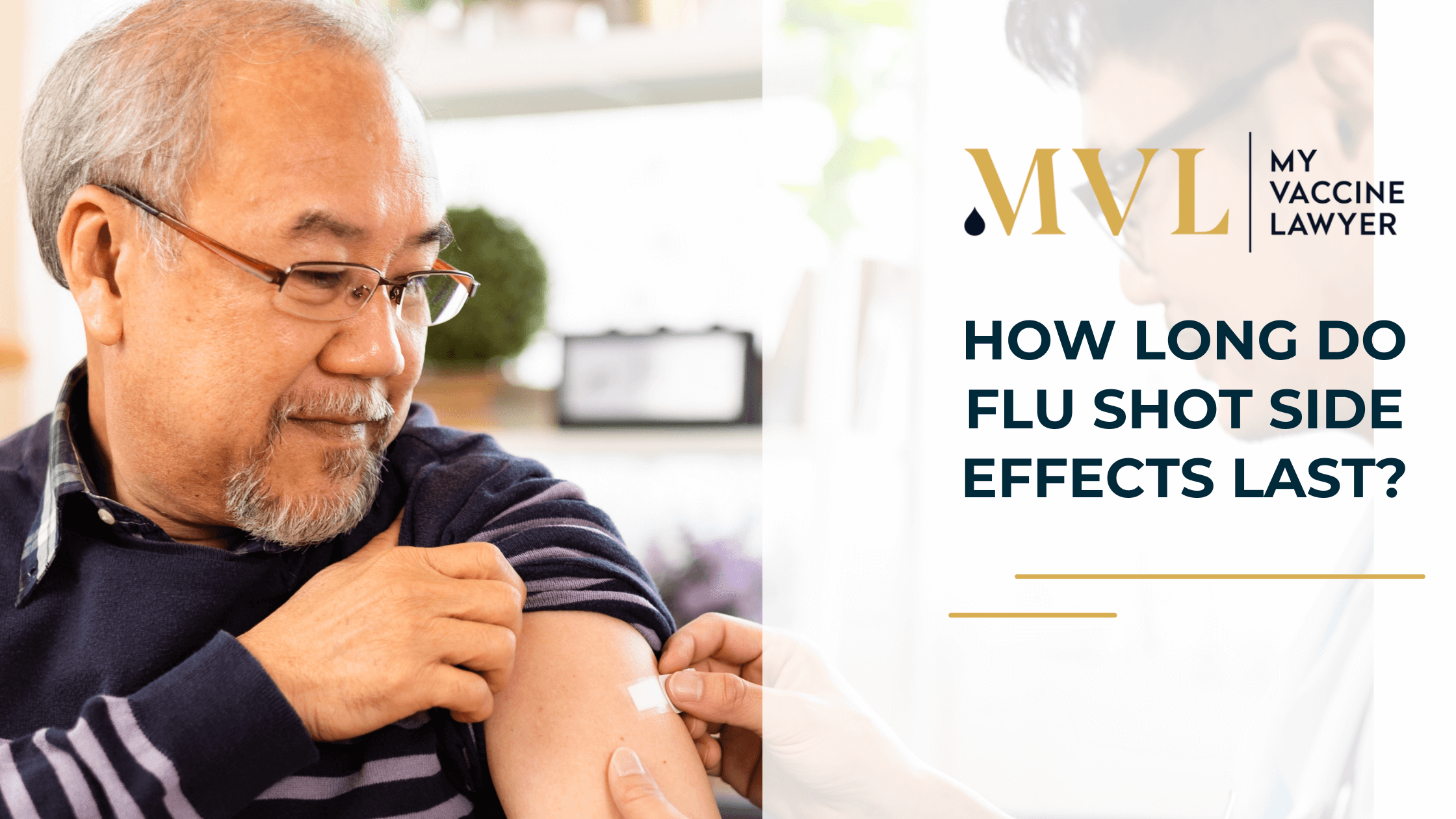
Still experiencing shoulder pain after a flu shot? Prolonged discomfort or loss of motion after a flu vaccination can resemble patterns seen in federal vaccine injury claims.
Our legal team will review your symptoms and timeline to determine whether a claim may be eligible for compensation under the VICP. Clinical guidance and large-scale flu vaccination data consistently show that typical flu vaccine side effects from an inactivated virus shot last only a few days. Soreness around the injection site, muscle aches, body aches, short-lived fatigue, and a mild fever are all anticipated outcomes. They reflect an immune system responding to the proteins in the flu vaccine so it can recognize the flu virus later in the season.
In real-world terms, most people experience a clear three-day arc.
On day one, the arm feels tender and movement may feel heavier through the upper body.
On day two, soreness, muscle aches, and tiredness peak.
By day three, the majority of mild side effects resolve and daily activity returns to normal.
Campaign reports across populations of a million people vaccinated each year show similar results. Most responses fall into the mild and self-limiting category, with only rare cases describing symptoms beyond this brief window.
Protection builds on a separate timeline. It takes about two weeks after flu vaccinations for the immune response against influenza to fully establish. This is why some individuals get the flu shortly after a flu shot if they were exposed beforehand. The infection was already underway.
For legal professionals, the timeline becomes useful when it diverges. Predictable, generally mild reactions that resolve within two to three days sit comfortably within recognized expectations. Ongoing symptoms, loss of shoulder function, repeated visits to a doctor, or flu shot side effects that continue to occur past the normal window indicate a different pattern, one that aligns more closely with issues documented in federal vaccine injury claims.
Take Control of Your Injury Today
Federal case records reveal consistent markers across shoulder-related vaccine injuries. These markers do not describe early soreness. They describe evolution.
One indicator is measurable loss of motion. Examples include difficulty lifting the arm to shoulder height, reduced strength during rotation, or increased tension when reaching across the body. These are functional deficits, not shot side effects, and they have appeared frequently in SIRVA-related petitions.
A second indicator is swelling that persists or expands beyond the injection site. Normal swelling peaks quickly. Persistent swelling often accompanies deeper inflammation and may prompt imaging. A third indicator involves hypersensitivity reactions such as a severe allergic reaction, a serious allergic reaction, widespread mild rash, or trouble breathing. These presentations are extremely rare across flu campaigns, yet any incident with life threatening characteristics requires immediate medical intervention.
Children occasionally experience a seizure caused by fever. Adults occasionally describe prolonged fatigue that feels like being sick without an active infection. These outcomes appear infrequently, yet they are recognised in medical literature when they occur. They also appear in a small portion of federal compensation claims when long-term consequences follow.
The practical value for the reader comes from pattern recognition. A reaction that declines predictably is ordinary. A reaction that intensifies, stabilizes at a high level or limits practical function may warrant documentation, further clinical evaluation and, when appropriate, legal review.
Across reviews of petitions involving the flu vaccine, certain shoulder, nerve and immune-related injuries appear more consistently than others. They are uncommon across the population of vaccinated adults, yet they form a significant portion of formally compensated claims. These conditions have measurable features, defined timelines and documented legal precedent. They also share a specific trait. Each presents with a course that diverges from the standard two to three day recovery after a flu shot.
The conditions below are the ones with the strongest established connection to flu vaccination through VICP case history.
If you suspect you have an injury from the flu shot then don’t hesitate to contact My Vaccine Lawyer for a free case evaluation.
SIRVA is the most frequent injury linked to injected vaccines in federal decisions, including the flu shot. The condition arises when the needle enters the shoulder capsule or bursa rather than the deltoid muscle. Reviews of compensated cases describe a consistent pattern. Pain begins within 48 hours of vaccination, then persists. Mobility reduces in a measurable way. Rotation strength declines. Imaging often shows bursitis, capsular inflammation or structural irritation.
A typical presentation includes difficulty lifting the arm, disrupted sleep due to shoulder tension, and ongoing limitation that restricts normal activity. These characteristics separate SIRVA from shot side effects. They appear clearly in petitions involving the influenza vaccine, many of which have been approved for compensation.
SIRVA cases also commonly reference prolonged stiffness. Clinical guidance notes that delayed improvement past the first week can cause secondary changes in shoulder mechanics. The legal relevance emerges from this extended trajectory.
Speak with a SIRVA vaccine injury lawyer.
Brachial neuritis, also known as Parsonage Turner Syndrome, appears regularly in VICP claims after the flu shot. Medical evaluations show inflammation within the brachial plexus, which affects nerve supply to the shoulder and upper arm. Presentations involve sudden onset of significant pain followed by weakness or sensory alteration. The sequence and progression serve as key criteria in case determinations.
Case literature provides examples. Flu vaccination in one shoulder is followed by the abrupt start of neuropathic pain within a recognised time period. Weakness then develops in a defined distribution, such as the deltoid or supraspinatus. These documented patterns, rather than subjective reports, form the basis of legally recognized claims.
Speak with a Brachial Neuritis vaccine injury lawyer.
Anaphylaxis remains extremely rare when compared across a million people who receive an annual flu shot, yet it has established legal precedent. Records show rapid progression involving airway restriction, widespread rash, cardiovascular involvement and urgent medical intervention. Compensation is considered when the timeline is clear and the diagnosis is confirmed.
Indicators include trouble breathing, rapid onset swelling, high fever associated with systemic response, and presentations documented as a severe allergic reaction or serious allergic reaction in hospital records. Federal claims involving anaphylaxis rely on objective findings and contemporaneous medical documentation rather than subjective descriptions.
Speak with an Anaphylaxis vaccine injury lawyer.
GBS appears in a limited number of flu vaccine petitions. The condition involves immune activation that affects peripheral nerves and leads to progressive weakness. Investigations focus on timing. Onset is typically within a recognised period after the flu vaccine, and testing confirms neurological involvement.
Compensated cases reference characteristic features. Loss of reflexes, symmetrical weakness, nerve conduction abnormalities, and the need for medical intervention. The condition is rare, yet its connection to flu vaccination has been acknowledged in select claims.
Speak with a Guillain–Barré Syndrome vaccine injury lawyer.
Vasovagal syncope is a brief loss of consciousness often associated with medical procedures. It has appeared in claims when followed by secondary injury. Fever-related complications in children, such as a seizure caused by temperature elevation, have also been recorded. These events do not resemble the effects of the flu, yet they carry legal relevance when sequelae persist.
Speak with a Vasovagal Syncope vaccine injury lawyer.
Flu vaccinations represent a significant portion of petitions reviewed in the National Vaccine Injury Compensation Program (VICP). The program assesses whether a documented injury follows a recognised timeline and whether the medical record supports a connection to the flu vaccine. It operates on a no-fault basis, meaning the evaluation focuses on evidence rather than proving negligence.
Several injuries linked to the flu shot have established precedent in compensated cases. SIRVA remains the most frequent. Brachial neuritis, anaphylaxis and GBS also appear in approved decisions when clinical findings and timelines align with recognised criteria. These outcomes are rare at a population level, yet they are well-documented in VICP adjudications.
My Vaccine Lawyer has secured multiple successful settlements for clients injured after flu vaccination. Examples include a $2,473,607 award in a GBS case, $106,160 for a frozen shoulder injury and $162,622 for a flu-shot-related SIRVA claim. These results reflect cases with strong medical documentation, clearly defined symptom progression and lasting functional impact.
Compensation through the VICP may include medical expenses, lost income, rehabilitation costs and pain and suffering. Claims involving prolonged shoulder dysfunction, confirmed nerve injuries or sustained neurological deficits after a flu shot are often evaluated to determine whether they meet the standards applied in previous VICP decisions.
Flu-shot injury claims depend on proof. The VICP evaluates documentation, timing, objective findings and consistency with recognized injury patterns. A vaccine injury lawyer organises this record, identifies gaps that influence compensation, prepares the medical narrative required for a petition and manages contact with government counsel and the Court of Federal Claims.
These cases succeed when the evidence aligns with prior decisions involving the common flu shot, not when someone simply reports discomfort. Legal representation helps patients present their claim in the structure the program expects, especially when evaluating injuries that create long term side effects, loss of shoulder function or neurological findings after flu vaccination.
If you have lingering shoulder restriction, nerve-related symptoms or other complications following a flu shot, our team will review the details of your reaction and determine whether your case resembles previously compensated flu-shot injuries. We prepare VICP petitions, gather medical records and build the evidence needed for a strong claim. Contact My Vaccine Lawyer for a free case evaluation.
An allergic reaction may qualify when the diagnosis is confirmed and the record shows rapid onset followed by measurable clinical intervention. Petitioners with reactions involving airway restriction, hives or cardiovascular involvement have been compensated when their documentation aligned with recognised criteria for vaccine-related anaphylaxis.
The common flu shot uses an inactivated formulation and is reviewed under the same legal framework as other influenza vaccines. The distinction becomes relevant only when identifying timing, severity and functional impact. Claims involving the most common side effects seldom qualify. Claims involving structural injury, neurological involvement or sustained loss of function undergo closer evaluation.
Flu-season timing can help clarify exposure to circulating viruses versus injury from vaccination. This information becomes useful when distinguishing between residual flu symptoms from infection and sustained complications that follow vaccination. The VICP focuses on the documented sequence of events rather than the intensity of the flu season.
Reports of feeling tired after vaccination appear across flu-shot surveillance data. These outcomes are brief and usually tied to immune activation rather than structural injury. They remain relevant only when fatigue persists long enough to overlap with long term side effects or when it contributes to missed work or extended medical evaluation.
Effects from the flu often include systemic illness, respiratory symptoms and multi-day fatigue. Extended shoulder restriction after vaccination reflects mechanical limitation or inflammation rather than infection. The VICP differentiates these outcomes through chart review and objective findings, not by symptom descriptions.
Muscle soreness is expected following the common flu shot, yet it becomes relevant in claims when it transitions into measurable loss of shoulder strength or range of motion. This distinction helps determine whether the reaction reflects routine recovery over a short period or a condition recognised in previous SIRVA petitions.
A sore throat or runny nose is typically associated with upper-respiratory exposure rather than injury from the flu vaccine. These symptoms may help clinicians rule out infection when assessing shoulder or neurological complications, but they add little weight to the legal evaluation unless they inform the overall chronology.
Records frequently show recommendations to prevent stiffness or reduce discomfort through early motion or medication. These notes help attorneys identify when clinical providers recognised abnormal recovery trajectories. They also help establish the timeline of functional limitation.
Long-term outcomes remain rare across large vaccination groups. When they occur, they often involve shoulder conditions, nerve injuries or complications that diverge sharply from the course of ordinary common flu shot sidereactions. These cases form a meaningful portion of VICP petitions related to flu vaccination.
A sore arm is a universal reaction and does not influence claim viability. Sustained loss of movement, escalating tension within the shoulder joint or prolonged reduction in function carries legal relevance. The distinction lies in duration and impact rather than initial tenderness.
Paul Brazil is a native of Dunmore, Pennsylvania and a graduate of Dunmore High School. For his undergraduate education, he attended Bloomsburg University where he majored in political science. He then went on to earn his JD from Widener University School of Law. Following graduation from law school, Mr. Brazil worked at a large Philadelphia civil defense firm where he litigated workers’ compensation claims and Heart and Lung Act cases. In 2012, he joined with his coworker Max Muller to form Muller Brazil.


Paul Brazil : Mar 18, 2025, 10:32:12 AM
Vaccines have a powerful role in protecting against dangerous diseases, especially for older adults and individuals at high risk.
Paul Brazil : Feb 8, 2024, 12:00:00 PM
As the upcoming flu season approaches, many people ask the same practical question: can you get a flu shot with a cold? The short answer is usually...

Paul Brazil : Nov 16, 2023, 12:00:00 PM
If you experience shoulder pain after a vaccination, you might have a Shoulder Injury Related to Vaccine Administration (SIRVA). Exercises like the...