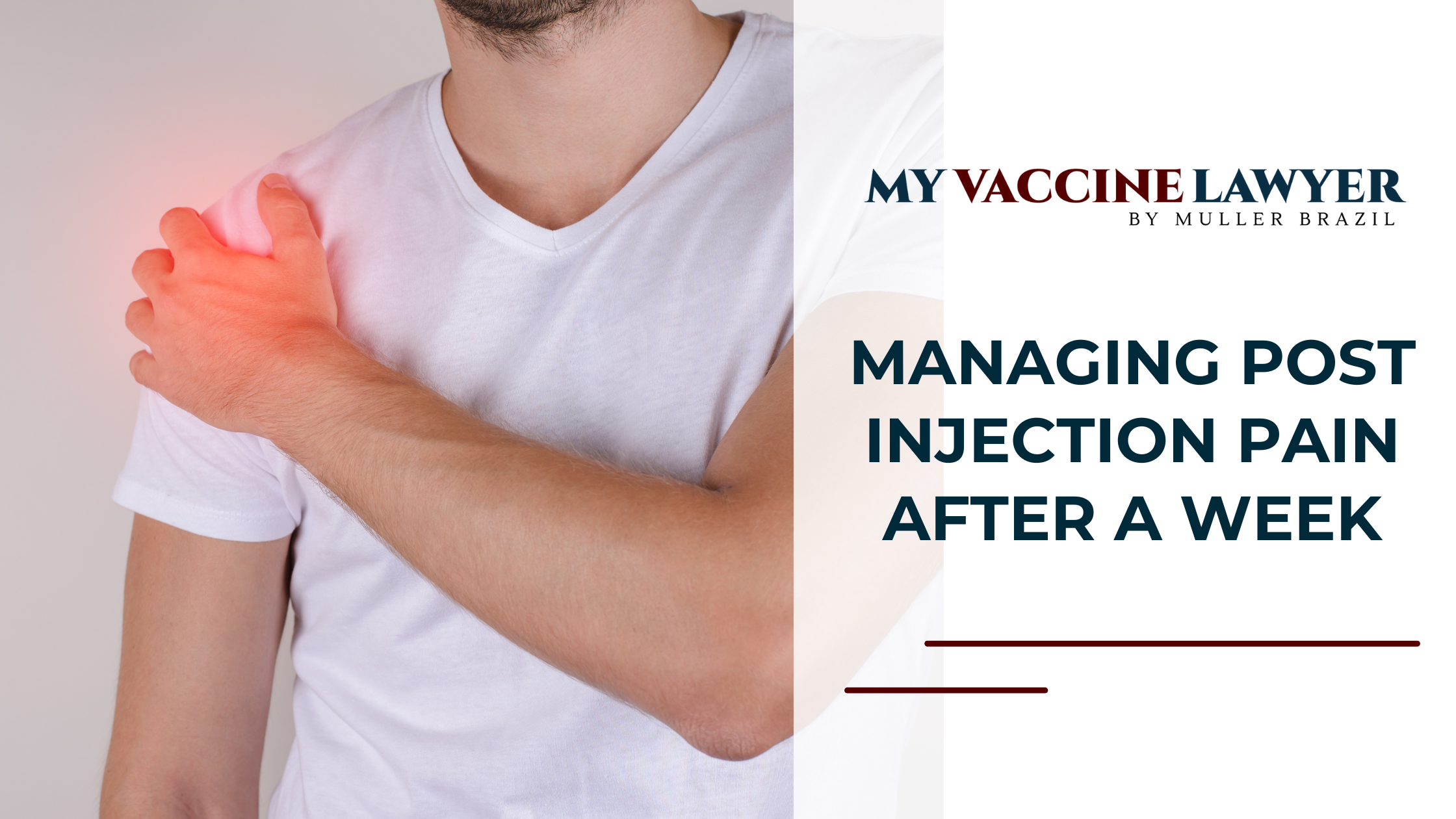
Lingering shoulder pain after a vaccine may be SIRVA if the pain started soon after the shot, did not feel like normal arm soreness, and was followed by limited shoulder movement. It may also be a VICP-covered vaccine injury if the vaccine is covered by the federal program and the medical records support the timing, diagnosis, and lasting harm.
Most arm soreness after a vaccine fades in a day or two. SIRVA is different. It may cause deep shoulder pain, loss of range of motion, trouble sleeping, trouble lifting the arm, and months of treatment. The legal question is not just, "Does my shoulder hurt?" The better question is, "Do my symptoms, records, timing, and vaccine type fit a claim under the National Vaccine Injury Compensation Program?"
Understanding SIRVA and How It Happens
Shoulder Injury Related to Vaccine Administration (SIRVA) is a shoulder injury that may occur when a vaccine intended for the deltoid muscle is injected too high, too deep, or into surrounding shoulder structures instead of the muscle itself.
The shot is supposed to go into the deltoid muscle. If the needle or vaccine material affects the bursa, tendons, ligaments, or other shoulder tissues, the person may develop pain and limited motion that goes beyond normal post-shot soreness.
SIRVA is not usually about the vaccine ingredients causing a body-wide reaction. It is usually about how the shot was placed. A deeper legal overview is available on working with a SIRVA lawyer for a vaccine shoulder injury.
Take Control of Your Injury Today
SIRVA vs. Normal Vaccine Arm Soreness
Temporary arm soreness is a common and expected reaction after many vaccines, but SIRVA presents differently. Normal post-vaccination soreness is usually mild to moderate, remains near the injection site, and often improves within 24 to 48 hours. You may notice tenderness when touching the arm, but you can generally continue moving the shoulder normally.
SIRVA pain tends to be deeper and more limiting. It may make it difficult to raise your arm, reach behind your back, put on a coat, wash your hair, sleep on the affected side, or perform overhead activities. Some people describe the pain as sharp, while others experience a persistent ache that does not improve like typical post-shot soreness.
One of the most important legal distinctions is timing combined with loss of function. If shoulder pain began within 48 hours of vaccination and was quickly followed by reduced range of motion, that pattern may be consistent with SIRVA. If symptoms developed weeks later or involve numbness, tingling, or pain radiating down the arm, a different medical condition or legal analysis may apply.
When Does Lingering Pain After a Shot Become a Legal Concern?
Lingering pain becomes a legal concern when it lasts, disrupts function, and is documented in medical records. The VICP has severity rules. For many injury claims, the effects must last more than six months, require inpatient hospitalization and surgical intervention, or result in death.
That does not mean you should wait six months before asking questions. Waiting can make a claim more difficult to document. If your shoulder still hurts after the first few days, or if you cannot move it normally, tell a medical provider that the pain started after the vaccine and explain the date it began. Early medical documentation can become important evidence later in the claims process.
For the legal side, My Vaccine Lawyer has a guide on the proof and documentation needed for a vaccine injury claim.
Signs and Symptoms That May Suggest SIRVA
SIRVA typically presents with shoulder pain and reduced range of motion in the same shoulder where the vaccine was administered. Symptoms usually begin within the required time period and may interfere with everyday activities.
Common symptoms may include:
- Pain deep in the shoulder rather than just skin tenderness
- Trouble raising the arm to the side or above the head
- Pain when reaching behind the back
- Stiffness or frozen shoulder symptoms
- Weakness caused by pain or limited motion
- Pain that wakes you up or makes it hard to sleep on that side
- A diagnosis such as bursitis, adhesive capsulitis, tendonitis, or rotator cuff injury
A SIRVA claim is strongest when the pain and limited motion are in the vaccinated shoulder, not spread across the whole body. If you have numbness, tingling, weakness in the hand, neck pain, facial weakness, balance trouble, or symptoms in both arms, the issue may still matter legally, but it may not be a classic SIRVA case.
Work With Us At No Cost
Why Timing Matters in a SIRVA Claim
Timing is one of the most important factors when evaluating a potential SIRVA claim. For a Vaccine Injury Table SIRVA claim, the first shoulder pain must begin within the required time period after vaccination.
That 48-hour window is not the same as the filing deadline. It is the symptom-onset window used to evaluate whether the shoulder injury fits the Table definition. The filing deadline is separate and discussed below.
Medical records should be as specific as possible. "Arm hurt after shot" is less helpful than "right shoulder pain began the evening of the flu shot and I cannot lift my right arm above shoulder height." If the shot was a flu vaccine, this related page on flu shot injury claims may also be useful.
Does the Vaccine Have to Be Covered by the VICP?
Yes. A VICP claim starts with a covered vaccine. The program covers many vaccines routinely given in the United States, including seasonal flu, Tdap, DTaP, MMR, hepatitis A, hepatitis B, HPV, Hib, meningococcal, pneumococcal conjugate, polio, rotavirus, varicella, and others listed by HRSA.
Some vaccines are not handled in the VICP. HRSA states that COVID-19 vaccine claims belong in the Countermeasures Injury Compensation Program, not the VICP. HRSA also notes that non-seasonal flu vaccines tied to a pandemic may be handled differently.
If the vaccine is covered, the next question is whether the injury fits the Table or can be proven with medical evidence. My Vaccine Lawyer explains the broader federal process here: National Vaccine Injury Compensation Program claims.
When SIRVA Qualifies Under the Vaccine Injury Table
Although SIRVA appears on the Vaccine Injury Table for many covered vaccines, not every shoulder injury automatically qualifies for compensation. A person must still satisfy the legal definition and timing requirements established by the VICP.
For SIRVA, the legal definition focuses on shoulder pain and limited range of motion after an intramuscular vaccine in the upper arm. It also looks at whether there was a prior shoulder problem, whether the pain began within the required time period, whether the pain and reduced motion are limited to the vaccinated shoulder, and whether another condition better explains the symptoms.
Another important part of the analysis is whether another medical condition better explains the symptoms. The government may look for another explanation, such as cervical radiculopathy, brachial neuritis, a separate nerve injury, arthritis, a traumatic injury, or preexisting shoulder disease. A good claim is built around the medical record, not just the patient's memory.
Other Vaccine Injuries That May Qualify for the VICP
Not every vaccine-related shoulder injury is SIRVA. Some people experience different Vaccine Injury Table injuries or off-table injuries that may still qualify for compensation under the VICP, although these claims often require different medical evidence.
Other VICP claims may involve neurological conditions, allergic reactions, Guillain-Barre syndrome, brachial neuritis, transverse myelitis, or other diagnosed injuries that need careful review. These are not the same as SIRVA. The symptoms, tests, timing, and legal proof are different.
If the main issue is compensation for a covered injury, the firm also has a plain-English guide to vaccine injury compensation.
Work With Us At No Cost
Medical Diagnoses Commonly Associated With SIRVA
SIRVA is an umbrella term for a shoulder injury pattern. A doctor may not write "SIRVA" in the chart. Instead, the records may show a shoulder diagnosis that fits the injury.
Common diagnoses in SIRVA claims may include:
- Shoulder bursitis
- Subacromial bursitis
- Adhesive capsulitis, often called frozen shoulder
- Rotator cuff tendonitis or tendinopathy
- Rotator cuff tear
- Shoulder impingement
- Inflammation around shoulder tendons or bursa
Diagnosis alone does not prove a claim. The record should also connect the diagnosis to the vaccine date, the start of pain, and the loss of motion. My Vaccine Lawyer has a focused page on rotator cuff vaccine injuries.
Medical Records That Strengthen a SIRVA Claim
Strong SIRVA claims are typically supported by consistent medical records, documented treatment, and a clear timeline connecting the vaccination to the injury. Medical documentation often carries more weight than personal recollection alone. My Vaccine Lawyer breaks down how to prove SIRVA in a separate guide.
Helpful records may include:
- The vaccine record showing the date, vaccine type, lot number, provider, and injection site if available
- Primary care, urgent care, orthopedic, or emergency room notes
- Physical therapy records showing reduced range of motion and pain scores
- MRI, ultrasound, X-ray, EMG, or nerve testing when ordered
- Injection records, such as steroid injections
- Surgery records if surgery was needed
- Work notes, disability paperwork, wage records, and missed-work proof
- A simple timeline of when pain started and how it changed
Tell each medical provider the same basic facts: which vaccine you received, which arm, when the pain started, how the pain differs from normal soreness, and what movements you cannot do. Do not exaggerate. Clear, consistent facts help more than dramatic language.
Medical Evaluation Is Important for Both Treatment and Documentation
Seeking prompt medical evaluation can improve both your medical care and the documentation available if a vaccine injury claim is later pursued. A healthcare provider can evaluate the shoulder, determine whether imaging or treatment is appropriate, and rule out other possible causes of pain.
From a claim standpoint, medical care also creates the record. Many people wait because they assume the pain will go away. Some do recover. But if the pain does not go away, a long gap in treatment can make the case harder to prove.
Treatment may include physical therapy, anti-inflammatory medication, steroid injections, imaging, specialist care, or surgery in more serious cases. The right treatment is a medical decision. The legal point is simple: get the injury evaluated and documented.
Get Help Today
How Long Do You Have to File a VICP Claim?
For an injury claim, HRSA states that a petition generally must be filed within three years after the first symptom or manifestation of onset. For death claims, different rules apply, including a two-year deadline from death and a four-year limit from the first symptom or onset of the injury that led to death.
For SIRVA, the deadline is often counted from the first shoulder pain, not from the date of a formal diagnosis and not from the date you learned about the VICP. That is why early legal review matters.
Do not assume you are late or safe based on rough memory. A lawyer will want the vaccine date, first symptom date, first medical visit, diagnosis dates, and the current status of the injury. More detail on the vaccine injury statute of limitations is available on the firm's website.
Potential Compensation Through the VICP
Compensation under the VICP depends on the facts of each individual case. Qualifying claims may include compensation for unreimbursed medical expenses, future care, lost earnings, and pain and suffering, subject to the program's rules and statutory limits.
The VICP is not a normal personal injury lawsuit. You do not sue the pharmacy, nurse, doctor, or vaccine maker in the usual way. A petition is filed in the U.S. Court of Federal Claims, and the case is reviewed under the federal vaccine program. Past vaccine injury settlements show the range of outcomes in resolved cases.
Attorney fees and costs are handled differently than in many injury cases. HRSA states that attorneys may be eligible for reasonable fees paid by the VICP directly if certain requirements are met. My Vaccine Lawyer also explains that qualified clients do not pay out-of-pocket attorney fees for VICP representation.
Common Mistakes That Can Weaken a SIRVA Claim
The most common mistake is waiting too long. The second is letting the records stay vague. If the medical chart only says "shoulder pain" with no vaccine timing, the case may be harder.
Other mistakes include:
- Not getting the vaccine record
- Not telling the doctor the pain began after the shot
- Assuming the claim is impossible because no one wrote "SIRVA" in the records
- Assuming the claim is automatic because the shoulder hurt after a shot
- Missing physical therapy appointments without explanation
- Ignoring prior shoulder records that the government may review
- Waiting until the three-year deadline is close
Successful VICP claims are supported by thorough medical records, documented treatment, accurate timing, and evidence that connects the injury to the vaccination. It is won with records, timing, diagnosis, and a clear medical explanation. For a broader look at common pitfalls, see why VICP claims get denied.
Take Control of Your Injury Today
How Preexisting Shoulder Conditions May Affect a Claim
A prior shoulder condition does not automatically prevent someone from pursuing a SIRVA claim, but it often becomes an important part of the legal and medical analysis.
If you had old shoulder pain but recovered before the shot, the records need to show that. If you had an active rotator cuff problem, arthritis, frozen shoulder, neck issue, or recent injury before the shot, the case may be more difficult. It may still deserve review, but the proof burden can change.
This is one reason a lawyer asks for prior medical records. Those records help show whether the vaccine event caused a new injury, worsened an existing problem, or happened around the same time as an unrelated condition.
Does an Injection Error Have to Be Admitted?
A healthcare provider does not have to admit that an injection error occurred for a SIRVA claim to be evaluated. Many medical records do not specify exactly where the needle was placed, so legal review instead focuses on the overall medical evidence, symptom onset, diagnosis, and treatment rather than an admission of error. My Vaccine Lawyer has a related page on problems caused by an incorrect intramuscular injection.
The legal review looks at the full pattern: vaccine type, injection site, onset within the required window, limited range of motion, lack of prior shoulder problems, diagnosis, treatment, and whether another condition explains the pain.
That said, if the injection felt high, if the provider struggled with placement, or if you noticed pain right away in the shoulder joint rather than simple muscle soreness, write down what happened while it is fresh.
Information to Gather Before Speaking With a Vaccine Injury Lawyer
You do not need a perfect file before requesting a case review. A small amount of basic information is usually enough for an attorney to begin evaluating whether additional records may be needed.
Be ready to answer:
- What vaccine did you receive?
- What date did you receive it?
- Which arm was used?
- When did the pain start?
- What could you no longer do with the shoulder?
- Did you have shoulder problems before the shot?
- What diagnoses have doctors given?
- What treatment have you had?
- Are symptoms still ongoing?
- Have the symptoms lasted more than six months, or did they require surgery or hospitalization?
If you do not know every answer, that is normal. A vaccine injury lawyer can help identify what records are missing and whether the timing may still fit.
Work With Us At No Cost
Next Steps if Shoulder Pain Persists After Vaccination
If shoulder pain began within the required time after a covered vaccine (typically within 48 hours) and has not improved, taking a few practical steps may help support both your medical care and any future legal review.
- Get medical care and explain the vaccine timing clearly.
- Save your vaccine record and treatment records.
- Ask a vaccine injury lawyer to review the timing, diagnosis, and deadline.
Do not wait for someone at the clinic or pharmacy to tell you about the VICP. Many injured people never hear about the program until they search on their own. For a step-by-step walkthrough, see what to do after a vaccine injury. A free review can help you find out whether the pain is normal soreness, possible SIRVA, or another vaccine injury that needs a different kind of proof.
Frequently Asked Questions
Can SIRVA start right after the shot?
Yes. SIRVA pain often starts the same day or within 48 hours. Some people feel unusual pain right away. Others notice it later that day or the next day when they try to lift the arm.
Can SIRVA symptoms last for months?
Yes. SIRVA can last weeks, months, or longer. For VICP eligibility, the lasting impact matters because many claims require symptoms that last more than six months, inpatient hospitalization with surgery, or death.
Do I need an MRI to prove SIRVA?
Not always. An MRI can help when it shows bursitis, rotator cuff injury, adhesive capsulitis, or another shoulder condition. But a claim is usually based on the full record, including exam findings, treatment notes, range of motion limits, timing, and prior shoulder history.
What if my doctor says it is bursitis or frozen shoulder, not SIRVA?
That may still fit a SIRVA claim. SIRVA is the legal and medical pattern tied to vaccine administration. The chart may list a specific shoulder diagnosis such as bursitis, frozen shoulder, tendonitis, or rotator cuff injury.
Can I file if the vaccine was months ago?
Possibly. Many people do not learn about the VICP right away. The key issue is the filing deadline, which is generally three years from the first symptom for injury claims. Have the dates reviewed before assuming you are out of time.
Do I have to prove the nurse or pharmacist was negligent?
Not in the same way as a normal malpractice case. The VICP is a no-fault program. For SIRVA, the claim focuses on whether the facts meet the program's requirements or can be proven with medical evidence.
Can numbness or tingling be SIRVA?
Classic SIRVA is a musculoskeletal shoulder injury, not a neurological injury. Numbness, tingling, or radiating symptoms may point to another condition that needs medical evaluation and a different legal review.
What if the pain is in the opposite shoulder?
SIRVA usually involves the same shoulder where the vaccine was injected. Pain in the opposite shoulder may have another cause. It may still be worth discussing with a doctor, but it is not the usual SIRVA pattern.
Can COVID-19 vaccine shoulder injuries be filed in the VICP?
HRSA states that COVID-19 vaccine claims are handled through the Countermeasures Injury Compensation Program, not the VICP. This is an important program distinction and should be checked before filing.
Is there a cost to have My Vaccine Lawyer review my case?
No. My Vaccine Lawyer offers free case evaluations for potential vaccine injury claims. In qualified VICP matters, attorney fees are paid through the program and do not come out of the client's compensation.
Conclusion
Lingering pain after a vaccine should not be ignored when it is deep in the shoulder, began soon after the shot, limits movement, and does not resolve like normal soreness. That pattern may be consistent with SIRVA. Other symptoms may point to a different vaccine injury that requires a different medical and legal evaluation.
The safest next step is to get medical care, document the timing, keep your vaccine record, and have the legal deadline checked. A strong vaccine injury claim starts with clear facts, not guesswork.
Get Help Today
 Paul Brazil
.png)


 Paul Brazil : Nov 16, 2023, 12:00:00 PM